By: Sonaya Vazquez-Wright
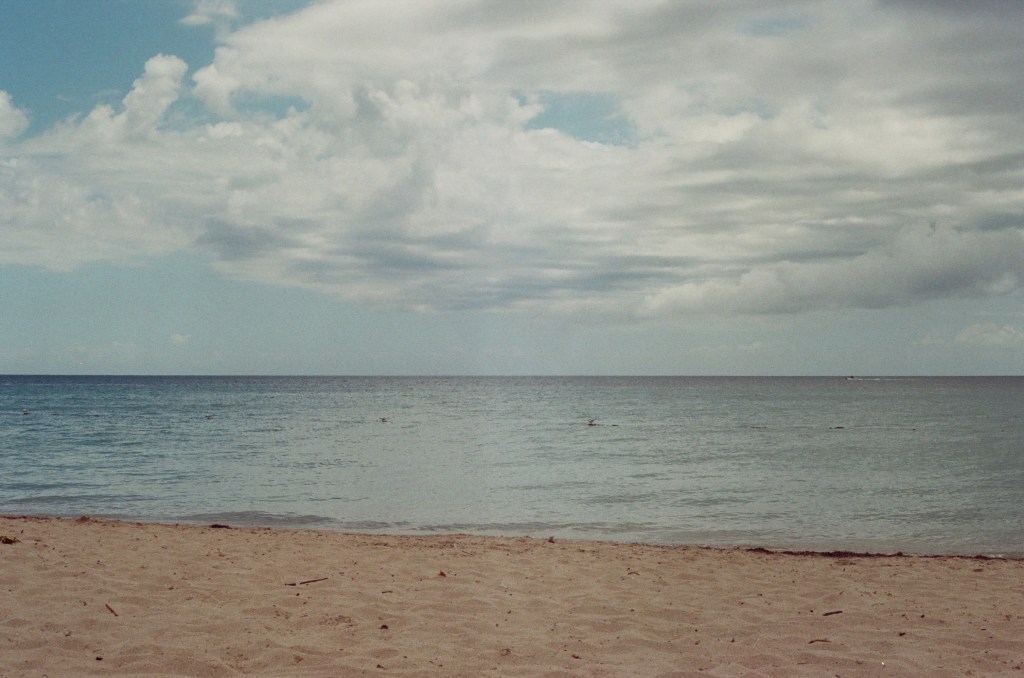
Puerto Rico is a biodiverse, culturally rich island in the Caribbean Sea and part of the Greater Antilles. Colonial and neo-colonial land management practices in Puerto Rico have not only degraded ecosystems but continue to shape who controls and benefits from ecological restoration, revealing how restoration is inherently political. The island has a long history of colonisation, which can be divided into two periods: Spanish colonisation (1493–1898) and U.S. colonisation (1898–present). This impact is clearly exemplified by ongoing debates over coastal land. In recent years, Puerto Rico, especially the coast, has been threatened by the luxury tourism economy and tax incentives from the U.S. Any change to the coast greatly affects the island and its inhabitants, as 60% live along the coast and it’s closely linked to the community’s cultural identity and economic success. Legally, all beaches on the island are public property, yet ongoing efforts seek to privatise them for economic gain or personal interest. In his paper Who owns Puerto Rico’s beaches? Law, extractivism, and the political economy of paradise, Jose Atiles introduces the idea of extractivism as exclusion “to describe the accelerated process of enclosure of resources and the exclusion of impoverished, working and often radicalised communities from accessing the beaches (one of PR’s most important natural resources)”. He explains that people from the global North view the global South as an undeveloped, unspoiled land that can be moulded into paradisiacal spaces. In the case of Puerto Rico, it’s being developed with luxury tourism and offshore finance companies in mind. As Atiles states, “luxury travel, particularly in the Global South, transforms entire coastlines, forests and urban zones into consumable experiences for Global North elites”. The construction of private luxury hotels, resorts, golf courses, and small-scale projects destroys mangroves, wetlands, beaches, and other coastal areas. Puerto Rico is marketed as an idyllic paradise, but the realities of this distinction are untrue and often maintained through violence, oppression, and displacement. As Atiles comments, “paradise is manufactured…a product of deliberate legal and political-economic interventions…driven by developmental projects rooted in colonial practices, where the land and resources are manipulated to fit a predetermined aesthetic and economic activity”. They deliberately ignore the land’s ecological and social histories, and the people who inhabit it. Instead, they see their actions as helping to progress this “underdeveloped” country. Atiles further explains how native inhabitants are expected “to embody characteristics that align with paradise’s exotic yet non-threatening image, seen as part of the landscape and not independent”. This image is upheld through violent, exclusionary practices, and displacement. This exploitative way of thinking echoes the previous colonial mindset of Spain during the colonisation of the “New World”, and the interactions between foreigners and Puerto Ricans mirror the relationships and impacts of the Spanish conquistadors and the indigenous.
Journalist Dánica Coto explains how weak oversight, limited budgets, and illegally issued permits have fuelled construction in protected areas. For example, in the Jobos Bay National Estuarine Research Reserve, environmental crime, including illegal construction, mangrove deforestation, wetland filling, and sewage discharge, has been ongoing for decades. Multiple local and federal agencies have repeatedly failed to enforce environmental laws despite being aware of the destruction. One instance occurred when wealthy Puerto Ricans illegally cut mangroves and filled in the shoreline to build vacation homes. This illegal construction prompted public outcry, protests, and ultimately legal action. Hypocrisy is evident here. Local communities are prohibited from continuing sustainable mangrove harvesting practices, while others build illegally, and the government ignores, highlighting discriminatory, biased governance. The reserve is located on the Southern coast. It includes seagrass beds, 2,900 acres of protected mangrove forest, and a bay that provides habitat to critically endangered species like the brown pelican, peregrine falcon, hawksbill turtle, and West Indian manatee, according to data collected by the National Oceanic and Atmospheric Administration (NOAA). These mangroves are important ecological features, as they serve as a protective barrier against storm surges during hurricanes. As climate change drives ocean warming, these hurricanes are becoming more frequent and intense, underscoring the need for healthy, resilient mangrove forests.
U.S. tax incentives are also prompting more foreigners to relocate to and obtain permanent residency in Puerto Rico. Act 22 of 2012, now Act 60 of 2019, is one of the main drivers of coastal gentrification and displacement. Atiles comments that this act “actively redefines who may inhabit, access or benefit from coastal spaces”. Act 60 provides tax exemptions to individuals who spend 183 days per year there and establish a primary residence, including a fixed 4% income tax rate, a 100% capital gains tax exemption, a 75% property tax exemption, and a 50% municipal license tax exemption, according to InvestPR.org. In the web article, “Puerto Ricans Are Protesting to Protect Their Beaches”, author Angely Mercado explains that as a result of Act 60, many “wealthy mainland Americans, social media influencers, and ‘crypto colonisers’” are taking advantage of the opportunity to purchase real estate at low cost, thereby raising the island’s cost of living. In a study conducted by the Surfrider Foundation, they found that “new developments had increased by 239% in the past few years”. These new residents are purchasing properties previously owned by low-income communities or protected by the government, then privatising beach access and undertaking potentially harmful construction projects. Mercado further details how some new residences are “dangerously close to the water, and future flooding could cause wastewater or litter to end up in the ocean, endangering marine life”. House flippers and short-term vacation rentals also pose challenges, as they create areas composed solely of Airbnb listings, making these homes inaccessible to locals. These tax incentives and luxury developments are driving coastal gentrification, restricting public access, displacing local communities, and threatening both cultural and ecological resources along Puerto Rico’s coasts.
In cases such as these, community-led restoration efforts represent not just ecological repair but also acts of decolonial resistance against centuries of external control over land and the environment. This coastal restoration can take many forms, from planting trees to anti-gentrification and anti-privatisation movements. Along with providing cultural and recreational value, a healthy coast is “a first line of defence against the impacts of climate change… particularly from the increase in the frequency, intensity, and duration of hurricanes and associated storm surges” as stated by the Surf Rider Foundation. Many beaches are being restored, with efforts largely led by community organisations and local volunteers. For issues related to coastal development and illegal land use, protests and community actions are important tools to draw attention to the issue, halt developments, and pursue legal action. In Rincón, protests erupted over the construction of a pool outside a condominium. The community mobilised because developers sought to build a pool that would restrict beach access for locals and violate the federal Endangered Species Act by encroaching on the habitat of key turtle species, including the hawksbill and leatherback turtles. Journalist Coral Murphy Marcos explains how these protests “are part of a larger battle spearheaded by environmental activists against coastal development and privatisation of public beaches in Puerto Rico” in her article “‘The beaches belong to the people’: inside Puerto Rico’s anti-gentrification protests”. However, to effectively mitigate issues such as illegal or harmful development and coastal gentrification, legal reforms and greater government accountability and responsibility are needed.
Another community led restoration effort is occurring at the Mabodamaca Community Nature Reserve on the northwestern coast of Isabela, a municipality of Puerto Rico. Previous sand mining devastated the area, and the beach became a site for illegal dumping and vandalism. In 2006, local groups and the Surf Rider Foundation began cleaning efforts and advocating for the creation of a reserve. This area provides many ecosystem services, such as providing recreational space, and is an “essential refuge for migratory and local bird species, as well as threatened wildlife”. The dunes serve as key nesting sites for “endangered marine turtles like the leatherback sea turtle (Dermochelys coriacea) [and] act as natural buffers against wind and storm surge”. After Hurricane Maria, “95% of the mangroves in Isabela” were destroyed. Despite this devastation, restoration efforts undertaken before the storm helped mitigate flooding and protect against wind. After Hurricane Maria, “the Surfrider Foundation hired local staff to lead a formal long-term project focused on ecological recovery and the relocation of critical infrastructure away from rising seas”. Mangrove restoration efforts under the Surf Rider’s Climate Action Program have been taking place. Between 2024 and 2025, 18,000 mangrove plants and seeds were planted, and 40 acres of mangrove forest were restored by community volunteers and Surfrider Foundation staff. This program also carried out dune restoration projects led by students and volunteers. Another organisation that conducts environmental restoration projects throughout Puerto Rico is the Coalition for the Restoration of Santurcean Ecosystems (CRES, in Spanish). One project was located in Punta Las Marías, San Juan, Puerto Rico. The coast was restored through adaptation measures, including rock breakwaters, nature-based solutions, and the planting of native trees and shrubs. Based on data given by the organisation, CRES and volunteers planted 1,200 plants in 2023 and cleared the beach of 20,000 pounds of contaminants. In addition, this organisation educated the community about the coast and the need for protection and conservation.
Ultimately, Puerto Rico’s past colonial status and current Commonwealth status complicate restoration and conservation efforts, as Puerto Ricans lack full autonomy and legal control over their land. This leads to differing land use priorities between residents and their current colonial rulers, the United States. However, Puerto Rico’s ecological restoration efforts demonstrate that restoration and social justice are interwoven issues that must be addressed together. Restoration efforts can contribute to a sustainable and equitable future for Puerto Rico’s ecosystems and communities only by addressing the ecological degradation and inequalities at hand.
 Evergreen trinity
Leave a comment