By: Tutu (Rebekah) Chavarin
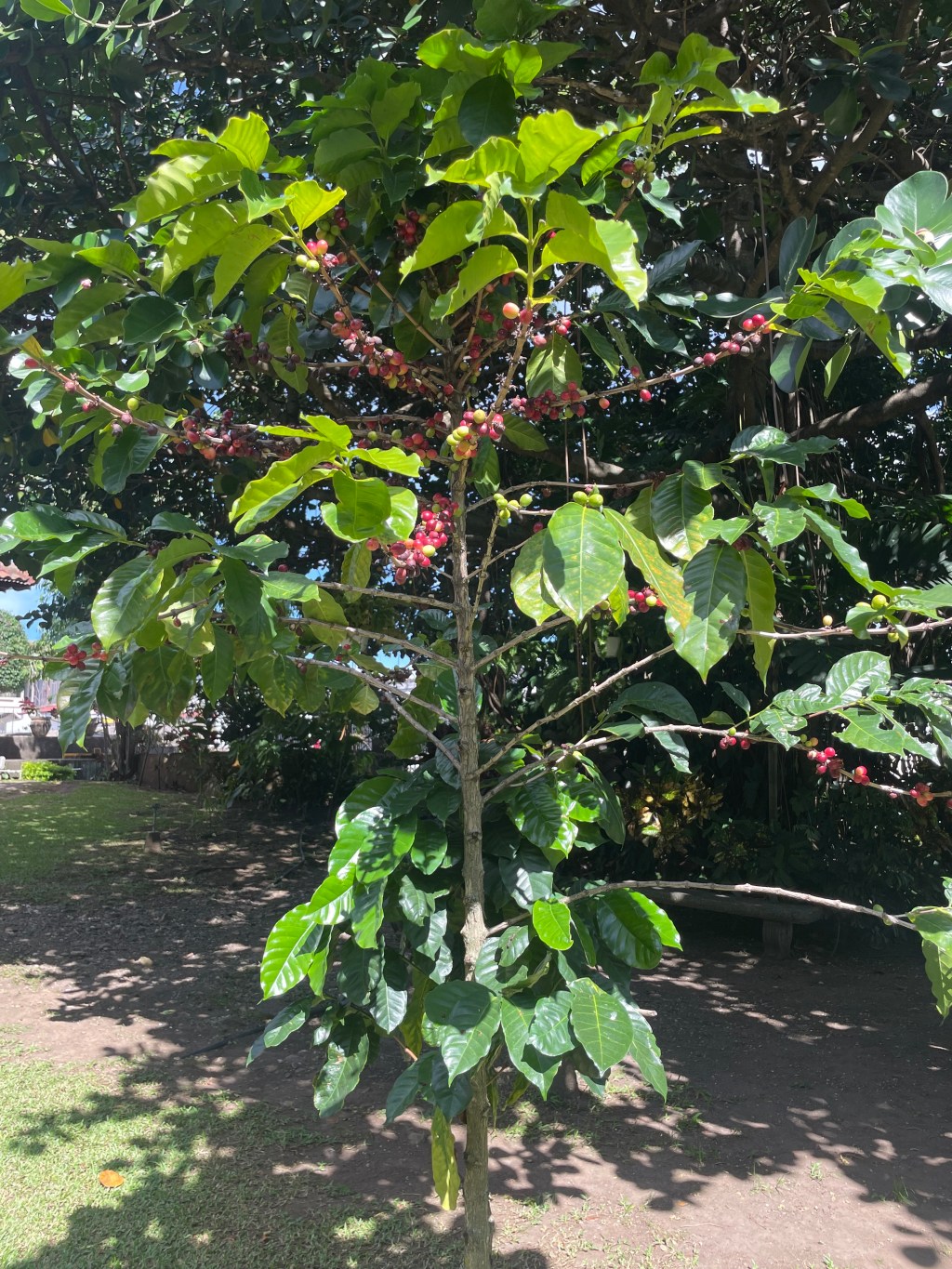
In December 2023, I took a tour of a coffee farm in Costa Rica with my grandmother, who I lovingly refer to as Mom. We were shown how the plant grows from a seed to plant to fruit, how coffee is picked and processed, met some of the workers that were finishing their shifts that day, and got to sample a cup of coffee made with beans grown on the farm. Mom enthusiastically chimed in with her extensive knowledge of the crop, responded to every fun fact the tour guide had with her own, and, when we were allowed to pick some of the coffee from the trees, she wrapped the basket we were given around herself like it was second nature and quickly and skilfully picked more fruit than the other members of our tour group combined. Mom is a coffee expert and everyone in our group was so grateful for her knowledge, but she doesn’t drink coffee and, in fact, hates the taste of it.
Mom was born on a coffee plantation in El Salvador where her mother worked and she would pick coffee fruit to earn pocket change for sweets. Her family left El Salvador in 1968 when she was 11 years old and immigrated to San Francisco where I was born. Within just two generations, between my grandmother and me, a relationship to coffee has transformed. I buy instant coffee in a jar at Tesco and mix it with hot water to wake up in the morning, drinking it while I look at Instagram. I’m aware of the labour it takes to produce the coffee I’m drinking, that my family history is directly connected to the production of coffee. Is there an 11-year-old girl in Colombia or Ethiopia that earned a few coins for using her tiny fingers to pick the fruit that made the drink? The drink that I’m pouring down the drain because I added too much sugar to it and now it’s gross and, anyway, I’m running late. I think this speaks to the disconnection from the production of our food that many of us in the Global North experience. This disconnect, I think, is largely due to the fact that most of us don’t have to grow and harvest our own food, especially food that has to be imported from the Global South like coffee.
Coffee can only grow between the Tropics of Cancer and Capricorn, meaning most of the world, including every single European country and the United States, must import their coffee beans. The biggest coffee exporters are in Central and South America, Africa, and Southeast Asia, regions that have historically been exploited for their natural resources and cheap labour. Coffee is typically grown on steep slopes, meaning that the small, red fruits must be handpicked. Besides the labour to actually pick the coffee, the beans must then be removed from the fruit (there are typically two beans per fruit and one coffee tree produces about 1 to 2 kilos of roasted coffee), cleaned and dried, and then roasted. Once roasted, the coffee beans can be ground to use in your espresso. It was my great grandmother’s job to turn the beans, using a tool that looks like a broom without bristles.
The environmental impact of coffee consumption must not be overlooked. After oil, coffee is the second most traded commodity in the world; the coffee trade produces over €26 billion annually and the demand for it keeps growing. Keeping up with this demand has led to mass deforestation in coffee growing regions, particularly in Central and South America, which has been identified by the WWF as the region hit the hardest by biodiversity loss. Additionally, it takes about 140 litres of water to produce one cup of coffee and the wastewater that results can carry pesticides that end up in the soil and rivers, infecting the drinking water of local communities and wildlife and transporting 1kg of coffee emits 11kg of CO2. After all of this, once the coffee arrives to its destination it is served in plastic-coated disposable cups, which are rarely recyclable.
This is not to say that the production and consumption of coffee should come to a screeching halt overnight. I think that being mindful about our consumption practices can make an impact. As a consumer, you have the power to put money towards coffee companies that participate in practices such as shade-growing coffee, which can help maintain biodiversity by not contributing to deforestation in areas already heavily impacted by climate change, to purchase coffee from companies who pay their workers fairly for the hard labour that is handpicking coffee.
I don’t write this to shame people for drinking coffee or demonise it in any way. But I think that understanding where our food comes from and the costs of producing it is an often overlooked aspect of environmental consciousness. Food production practices have a real impact on the lives of people every single day, particularly those living in the Global South where coffee and so many other commonly utilised crops, like chocolate and sugarcane, are produced. The people who pick and process your coffee beans are the same people feeling the direct consequences of a climate crisis caused, in part, by the coffee industry and the part it plays in global trade. More mindful consumption practices, putting money towards coffee companies that work to reduce the environmental impact of their production, may seem like a small personal choice with little impact (though I do believe small change can affect big change), but I think that there’s more to it than that. As humans, we are so much more connected to each other than we think. Our actions impact each other in more ways than we may be aware of. I think a fundamental part of climate action is knowing these tangible ways that we are connected, and knowing how we can take action to improve the conditions for people we may never meet.
 Evergreen trinity
Leave a comment