By: Varvara Vasylchenko
Surrounded by hills, with the Atlantic Ocean just beyond the horizon, there is a place that does not fit into the conventional vision of modern agriculture. Imagine: just over a dozen pigs roam through the woodlands, sniffing the leaves and digging up the ground in search of yummy treats. Meanwhile, hens run freely on the grass nearby, chasing insects and flapping their wings as they please. This scene feels almost surreal – and yet this is how everyday life looks like at Mulroy Meadow Farm, a small enterprise tucked into the landscape of North Donegal. Here, animal welfare is not a label or tick-the-box obligation–it is the foundation of the entire system, the very core of its philosophy.
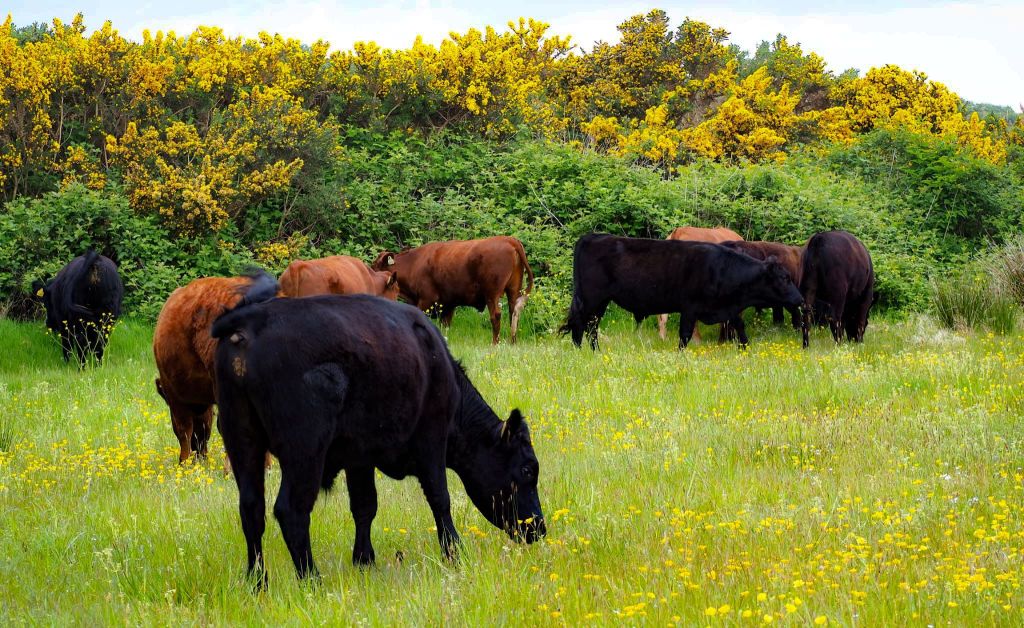
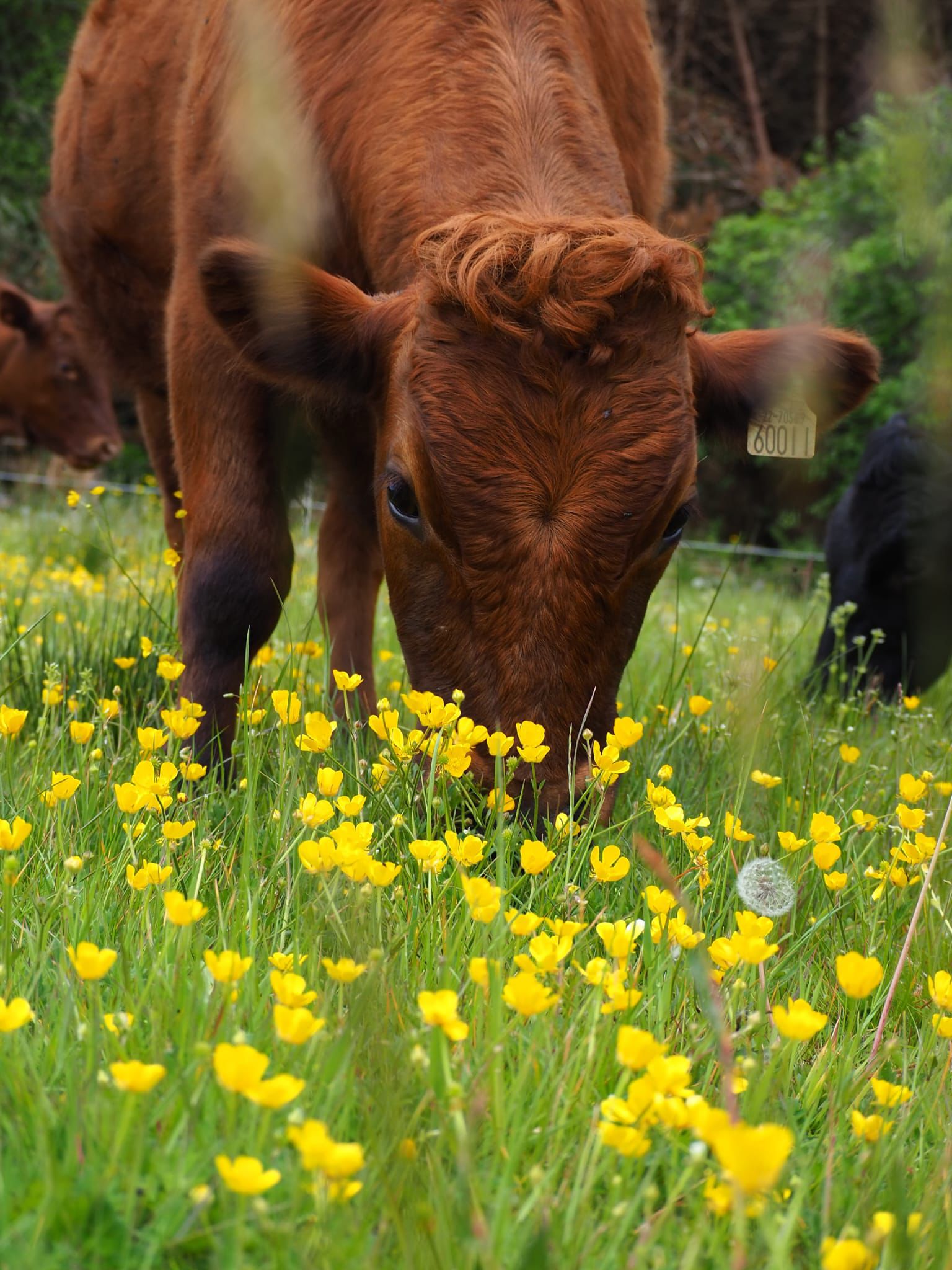
Mulroy Meadow Farm was established in 2020 by Cathal and Michelle, a couple with two young children. Committed to ethical farming, they prioritise giving animals what factories systematically deny: opportunities to move freely and being surrounded by the natural habitat. Their cattle graze on chemical-free pastures, native breed pigs live and forage in the forest, and chickens can be found chasing worms and frogs in the fields. Here, animal agriculture is centred around ensuring livestock can enjoy a fulfilling life and thrive. Mulroy Meadow Farm offers a working example of how ethical values can be embedded into agricultural practice.
However, the wider meat-producing industry operates on fundamentally different principles. In factory farms, billioms of animals endure existence in places that could be fairly described as torture camps. Throughout their short lifetimes, these animals never get to see the sunlight, to touch the grass or interact with other living beings. An inability to express their natural behaviours, such as playing, bonding and foraging, leading to chronic stress, anxiety and aggression in these animals. To prevent cannibalism and fights, factories practice physical mutilations, such as beak trimming, tail docking and castration. These extremely painful procedures are done without anaesthesia. Such manipulations endow animals with life-long pain, intensifying the misery of bleak lives that are already filled with suffering.
One of the many problems with factories is the lack of sufficient space for movement. “In the sheds, there are close to nine hens per square meter, so the birds can’t run or jump – they simply don’t have enough room to be active,” Cathal said. He also highlighted that official commitments to ethical practices do not always ensure meaningful improvement in living standards. “‘Free range’ now is just a product label,” he commented, remarking that the sheds frequently remain overcrowded. Cathal also pointed out that outdoor access alone does not guarantee better welfare. “There might be a door, but if the shed is packed, most hens don’t even know it exists,” he noted. “As a result, the majority of birds never actually go outside at all.”
At Mulroy Meadow Farm, home to around two hundred hens, living conditions are completely different. The birds are kept within mobile fencing that is moved every second day, which gives them continual access to the fresh ground. In line with bird flu prevention regulations, hens stay in shelter during winter months; however, as soon as the housing order is done, they are returned to the open pasture. To keep hens occupied and mentally stimulated, Cathal and Michelle provide them with so-called ‘boredom busters’. “If hens are stuck in a shed and bored, it’s no surprise they start pecking each other,” Cathal said, explaining that most animals need a certain amount of stimulation per day. “Pecking gives chickens something to do, so we provide them with seaweed twice a week and fresh vegetables from the market – products that are past their sell-by date but are still fine for animal consumption.”
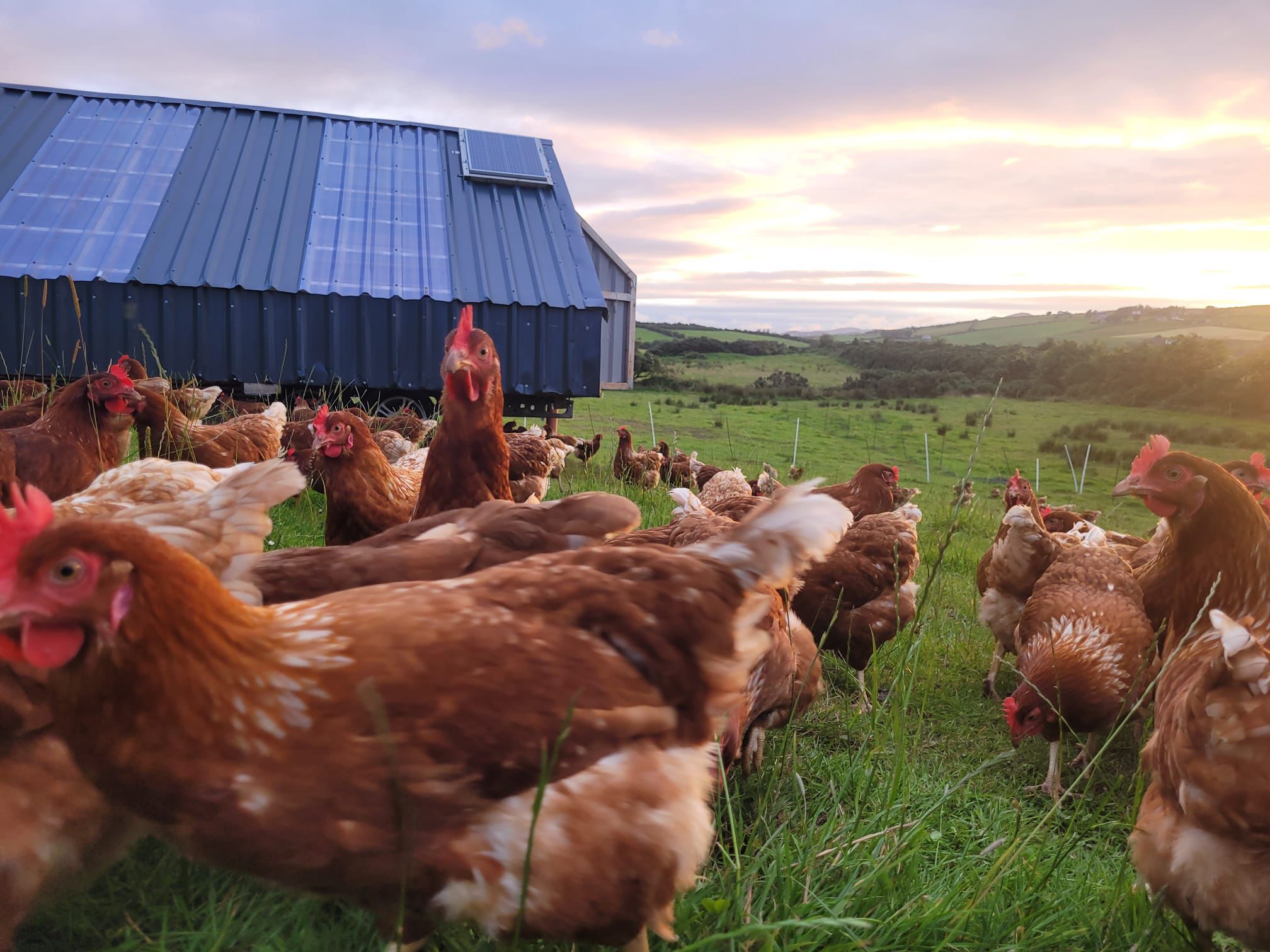
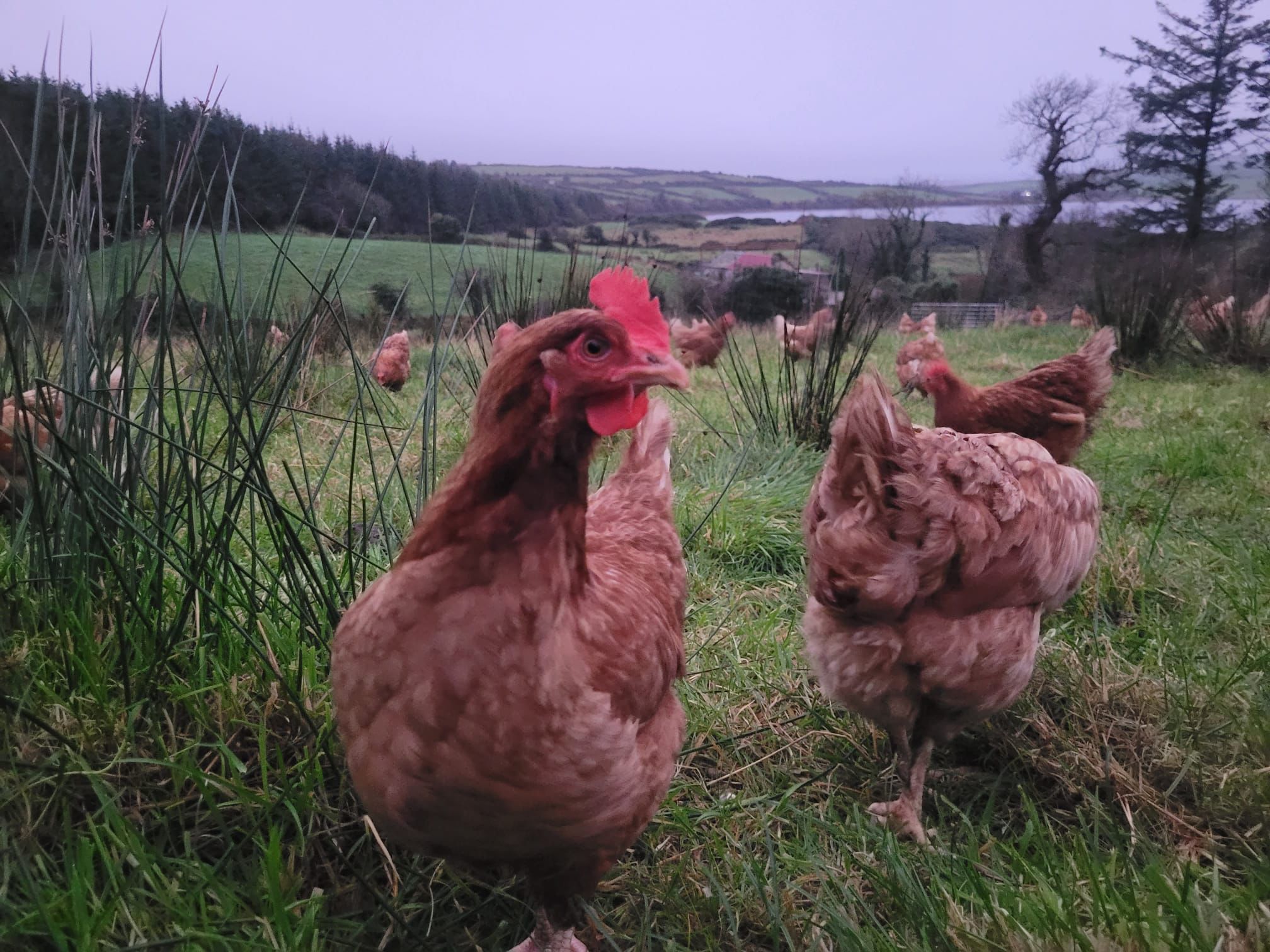
Technically, Mulroy Meadow Farm has two hens per square metre, but in practice the number of birds is not spread out evenly. “In our field, you can find yourself seeing chickens clustered in groups,” Cathal shared. “There are some ‘gaps’ with no birds, so any hen can run the whole way, flap its wings and do what it wants.”
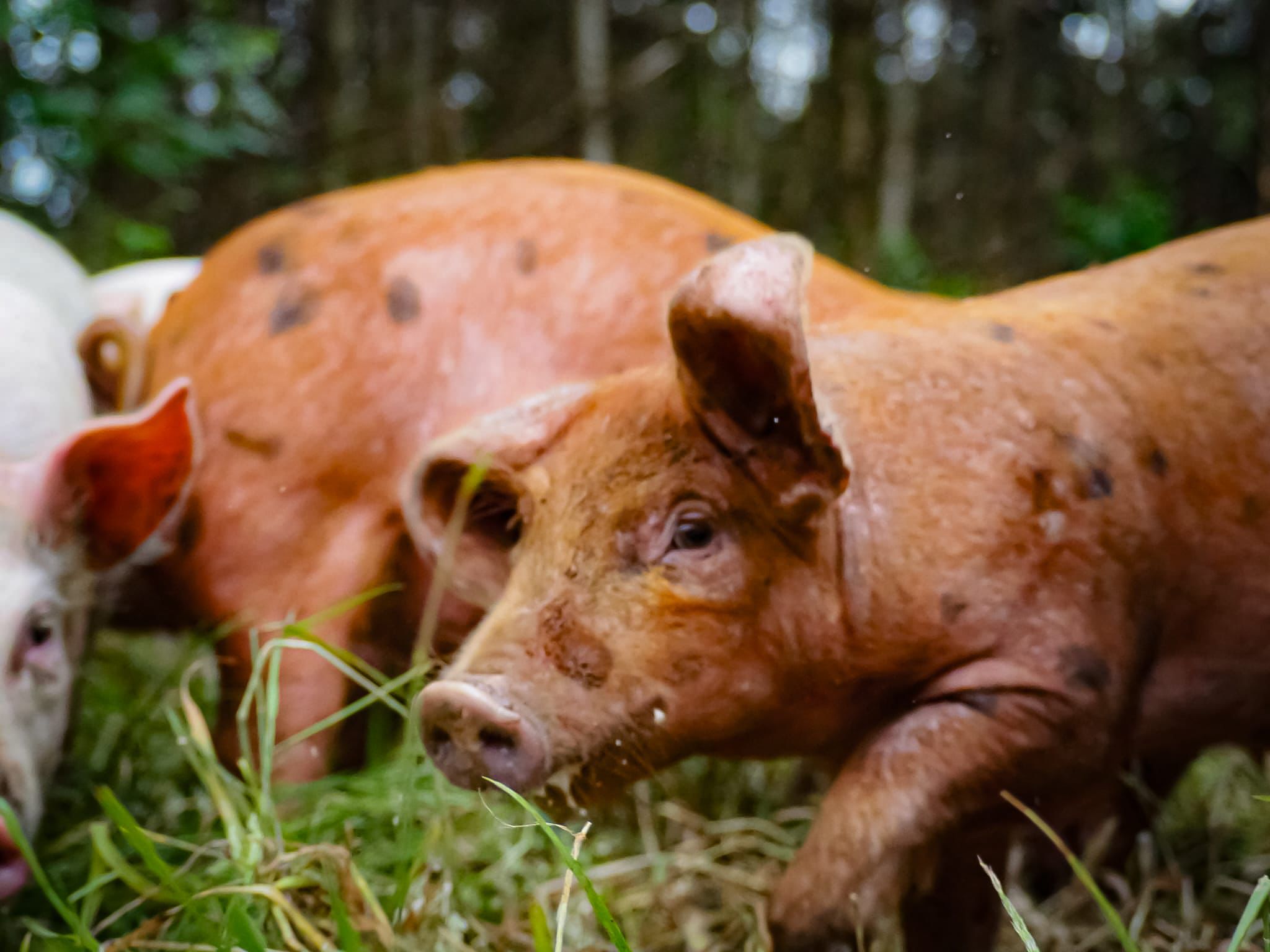
While hens here have access to the green pasture, the pigs are provided with a piece of forest to explore. Cathal and Michelle decided to raise traditional breed pigs, as this variety seemed to be most adapted to Irish woodlands. “With animals, the best types are usually crossbreeds, but we thought the native breed would feel more comfortable in the forest,” Cathal recalled. “Traditional breeds are hairier, so it seemed they would fare outside better than other species.” He noted that commercially-raised pigs might not be physically suited for life in the woodlands. “If you put a factory pig into the forest, it’ll probably eat the wrong thing,” he pointed out. “In this case, native breeds have a huge advantage: they intuitively know what to avoid in foraging.“
Even though pigs find some delicacies on the ground, this is not enough to sustain their diet fully. “In theory, creating a system where pigs subsist entirely on forest forage is possible, but it would imply relocating them to a new area every week,” Cathal suggested. When asked about the amount of feed, Cathal explained that animals on his and Michelle’s farm move a lot, so they spend more energy compared to indoor-raised livestock – as a result, they need more food to cover their needs. “Our chickens are very active,” he said. “They are athletes compared to factory-raised hens.” He added that what the birds find in the field typically makes up merely two to five percent of their caloric intake, so it is just a little complement to their diet, not a substitute.
When it comes to ruminant animals, Cathal and Michelle focused more on trying different approaches to grazing that minimise the negative environmental impact of raising cattle. Now, they use adaptive multi-paddock (AMP) grazing: a method that mimics the natural pattern of movement of dense ruminant herds. In this system, animals graze closely to each other in relatively small areas, moving to another section of the field after a short period of time. “The more break you give the ground between grazing, the better it will regenerate,” Cathal explained. This approach also contributes to healthier soils, improving biodiversity, increasing carbon sequestration and reducing the risk of flood as a result.
It should be noted that maintaining ethical farming practices involves additional economic costs. “Cheap food and high welfare don’t go together,” Cathal remarked. “When animals have more space, they use more energy, and when they use more energy, they eat more feed. Systems that prioritise animal welfare will produce more expensive meat and eggs–that’s just the way it is.”
Until the law efficiently regulates the agricultural sector, the trade-off remains an individual responsibility: whenever possible, choosing ethical production over lower price. While producers are directly responsible for farming practices, animal suffering is also sustained by consumer demand. By consistently showing preferences for ethically sourced food, anyone can send a message to the industry and influence market dynamics–opting out from doing so is a conscious choice.

 Evergreen trinity
Leave a comment